**This is not actually an interview with Elder Zwick, but these are his words from
“What are you thinking?” his General Conference Address from April 2014.
KA: Elder Zwick, thank you so much for joining me today! As you can imagine there are many of us who have been wanting to hear directly from a Church leader regarding some of the recent goings on in Mormonism, specifically the pending disciplinary council against Kate Kelly and other actions being taken against Ordain Women or members who have publicly expressed disagreement with Church stances.
From what I can tell, basically there is a scale of responses to the situation, both extremes are openly hostile and hateful to each other . . . and I suppose the middle would just be people who haven’t heard, don’t care, or are confused about the whole situation. I would believe very few people are actually in the middle, and it seems most people have actually picked “sides” and think the other side is wrong. I’ve been really disheartened by a lot of responses on both sides. It seems everyone seems like they have the ability to put themselves in the judgment seat and come to a conclusion that they are on the “right” side. I’ve seen a lot of condemnation, damnation, and name calling on both sides, etc. Could you provide some guidance for all of us to navigate this minefield?
Elder Zwick: "What does the phrase “no corrupt communication” mean to you? We all regularly experience highly charged feelings of anger—our own and others’. We have seen unchecked anger erupt in public places. All of us, though covenant children of a loving Heavenly Father, have regretted jumping headlong from the high seat of self-righteous judgment and have spoken with abrasive words before we understood a situation from another’s perspective. We have all had the opportunity to learn how destructive words can take a situation from hazardous to fatal. A recent letter from the First Presidency states clearly, “The gospel of Jesus Christ teaches us to love and treat all people with kindness and civility—even when we disagree” (First Presidency letter, Jan. 10, 2014). What a masterful reminder that we can and should participate in continuing civil dialogue, especially when we view the world from differing perspectives."
KA: Wow. Personally for me if I don’t understand this from another’s perspective I’m not following the Savior? As a Mormon feminist I obviously sympathize with the cause and love my OW brothers and sisters and the questions they are asking. Does that mean if I don’t love and understand those who are appalled and offended by OW I’m not being like my Savior? And those who are appalled and offended by OW are not belong like their Savior? How can we have a civil conversation with each other if there’s so much offense, disgust, and anger on both sides?
Elder Zwick: “There exists today a great need for men and women to cultivate respect for each other across wide distances of belief and behavior and across deep canyons of conflicting agendas. It is impossible to know all that informs our minds and hearts or even to fully understand the context for the trials and choices we each face. Nevertheless, what would happen to the “corrupt communication” Paul spoke about if our own position included empathy for another’s experience first? Fully owning the limits of my own imperfections and rough edges, I plead with you to practice asking this question, with tender regard for another’s experience: “What are you thinking?”
KA: Do you have a personal story that happened to you and your wife that might illustrate how we can overcome this ‘What are you thinking?’ gap?
Elder Zwick: Forty-one years ago I climbed into the driver’s seat of an 18-wheel semitruck with my beautiful wife, Jan, and our infant son, Scotty. We were taking a heavy load of construction materials across several states.
In those days there were no seat-belt restrictions or infant car seats. My wife held our precious son in her arms. As we made our descent over historic Donner Pass, a steep section of highway, the cab of the semi suddenly and unexpectedly filled with thick smoke. It was difficult to see, and we could hardly breathe. With a heavy rig, brakes alone are not enough to rapidly decrease speed. Using the engine brakes and gearing down, I frantically attempted to stop. Just as I was pulling to the side of the road, but before we had come to a full stop, my wife opened the door of the cab and jumped out with our baby in her arms. I watched helplessly as they tumbled in the dirt.
As soon as I had the semi stopped, I bolted from the smoking cab. With adrenaline pumping, I ran through the rocks and weeds and held them in my arms. Jan’s forearms and elbows were battered and bleeding, but thankfully she and our son were both breathing. I just held them close as the dust settled there on the side of the highway. As my heartbeat normalized and I caught my breath, I blurted out, “What in the world were you thinking? Do you know how dangerous that was? You could have been killed!”
She looked back at me, with tears running down her smoke-smudged cheeks, and said something that pierced my heart and still rings in my ears: “I was just trying to save our son.” I realized in that moment she thought the engine was on fire, fearing the truck would explode and we would die. I looked at my precious wife, softly rubbing the head of our infant son, and wondered what kind of woman would do something so courageous.
This situation could have been as emotionally hazardous as our literal engine failure. Gratefully, after enduring the silent treatment for a reasonable amount of time, each of us believing the other person was at fault, we finally expressed the emotions that were churning beneath our heated outbursts. Shared feelings of love and fear for the other’s safety kept the hazardous incident from proving fatal to our cherished marriage.
KA: Wait, wait, wait. So this is my interpretation (not yours) . . . The leaders Ordain Women were concerned for the spiritual lives of their sisters who were leaving over these very questions and issues they are raising. Their love and concern for these sisters promoted an action in which their perspective was imperative - they literally might be acting with hearts full of love with sincere intent of the salvation of souls and bringing and keeping them here with Christ. But if we are not in their head . . . it may just look like they jumped out of a totally safe vehicle. They may look insane and their actions may make us even angry, those who feel safe and wonderful in the vehicle.
Elder Zwick: When our truck cab filled with smoke, my wife acted in the bravest manner she could imagine to protect our son. I too acted as a protector when I questioned her choice. Shockingly, it did not matter who was more right. What mattered was listening to each other and understanding the other’s perspective.
KA: What I'm hearing you say is that this could this be a test for all of us? What matters is listening and understanding each other?
Elder Zwick: The willingness to see through each other’s eyes will transform “corrupt communication” into “minister[ing] grace.” The Apostle Paul understood this, and on some level each of us can experience it too. It may not change or solve the problem, but the more important possibility may be whether ministering grace could change us.
KA: So what should we do if neither side seems intent on listening to each other? What if one side refuses to speak to the other? That would obviously hurt the other side, but they would insistently ask that there be an attempt to understand them instead of being ignored. I’m sure the driver was offended because he thought it showed a lack of trust in his driving skills. This seems so sad that either side of this “marriage” could have taken steps to avoid this divorce. What a potential for beautiful marriage there was if things could have worked out differently. This is why I mourn.
Showing posts with label Disobedience. Show all posts
Showing posts with label Disobedience. Show all posts
Saturday, June 21, 2014

Saturday, January 11, 2014
Eve and her Honorable Disobedience
The Basics
The Mormon understanding of Eve is one of the reasons our doctrine is inherently feminist. Other religions have a different understanding of the Fall of Man and Original Sin. We do not believe she sinned or was cursed, but was blessed for her wisdom and courage!
In Mormon doctrine in premortal life our Father and Mother in Heaven created a plan for us to progress on a path back to God. By its nature it requires the Three Pillars of God's Plan: The Creation, The Fall, and The Atonement. It took seven "days" (periods of indeterminate time, since earthly time is not measured to God) for the creation to be completed. At that time Adam and Eve were living in the garden of Eden. Our belief is that in the Garden of Eden Adam and Eve had physical lives but unable to have children or be subject to mortal death.
2 Nephi 2:22 And now, behold, if Adam had not transgressed he would not have fallen, but he would have remained in the garden of Eden. And all things which were created must have remained in the same state in which they were after they were created; and they must have remained forever, and had no end. 23 And they would have had no children; wherefore they would have remained in a state of innocence, having no joy, for they knew no misery; doing no good, for they knew no sin.

So for God's plan to progress, Adam and Eve must leave the Garden of Eden. Since the greatest gift we have been given is freedom to choose, they had to leave the Garden by choice. God created a choice that had opposition - an opportunity for them to choose to fall. And thus the commandment not to eat of the fruit of the Tree of Good and Evil is in opposition to the commandment to multiply and replenish the earth.
We honor Eve. For it was her wisdom, her thoughtful consideration of partaking of the fruit that caused the plan to progress. If they had not left the Garden, the Plan would have been frustrated. We believe that she saw this and chose to disobey, and that she understood this even before Adam understood it. That the natural consequences of that choice was to be thrust out of God's presence (out of the garden) and into a mortal world where men had to work by the sweat of their brow and women would labor to bring life into this world. That they would be subject to life and death, sickness and health, joy and sorrow, and the knowledge of good and evil. We do not believe in Original Sin, but that "men are punished for their own sins and not for Adam [and Eve]'s transgression" and as found in Mosiah 3:19:
For the natural man is an enemy to God, and has been from the fall of Adam, and will be, forever and ever, unless he yields to the enticings of the Holy Spirit, and putteth off the natural man and becometh a saint through the atonement of Christ the Lord, and becometh as a child, submissive, meek, humble, patient, full of love, willing to submit to all things which the Lord seeth fit to inflict upon him, even as a child doth submit to his father.
This is one of the reasons why I believe the doctrine of Mormonism to be feminist. It honors and empowers women. The Lord honors and empowers us, not on a pedestal, but for who we are. Valerie Hudson Cassler, a Catholic Feminist convert to Mormonism, has a beautiful post over at Mormon Scholars, "I Am Mormon Because I am A Feminist":
Digging Deeper
I recently came across a beautiful post over at Rational Faiths about Leaving the Garden. I don't read over there often, but was researching the Fall and came across this essay by Jared Mooney. I've always been a little confused about the set-up of the choices in the Garden of Eden and the description of Eve's choice here is one of the most beautiful accounts I've ever read. So I'm going to go ahead and quote the last portion of his essay here:
"One of the things that the temple narrative has helped to make clear to me, is that good and evil, agency and accountability are almost never clear-cut. Even in Mormonism’s fundamental allegory, choice is established as a complex, rather than a simple reality. What Eve did was decidedly the most important act of disobedience in our canon. Many past leaders who place a high value on the principle of obedience have had to do some significant intellectual parsing of the terms sin and transgression, to try and get around the fact that is plainly manifest in the Eden narrative… that our eternal progression hinges on an act of blatant disobedience to the Gods. Notice that there’s no blaming going on. Both Adam and Eve supply a reason for their act, but plainly admit their fault to the Lord, “and I did eat.”
It’s also vital to distinguish that Eve was not duped. She was beguiled. According to Dr. Nehama Aschenasy, the Hebrew word that King James translators rendered as beguiled “is a rare verb that has rich and connotative meanings, indicating an intense multilevel experience evoking great emotional, psychological, and/or spiritual trauma.” He suggests it was a catalyst for Eve to undergo a deep internal process, wherein she pondered at length the consequences of her prospective choice and its relation to her ultimate purpose in the garden. That sounds like a faith crisis to me.
It’s also important to note that the tree is never identified as a symbol of evil or wrongdoing. The language surrounding the tree is overwhelmingly positive. “the tree was good for food, and that it was pleasant to the eyes, and a tree to be desired to make one wise”. Furthermore, God told Adam and Eve that it was THEIR tree. “Nevertheless thou mayest choose for thyself, for it is given unto thee.” In the English sentence it appears as if the “it” pronoun refers to “choice”, but in the Hebrew it is clearly referring to the tree. God was, in essence telling them, “I am now commanding you to avoid this particular tree, but like all of them here, it’s YOUR TREE and you can do what you like with it… but remember that I told you no”. This is the equivalent of your mom telling you, “Don’t eat your halloween candy before dinner, because it’ll spoil your appetite… buuuut, it is your candy and you can do whatever you want with it.”
 "The
world has invented narratives that cast her as the fool, the simpleton,
the bystander, and even the whore. Even in the church, we try to have
her both as the foresighted heroine and the servile mute. But Eve, the
mother of all living is what she always has been: an incredible woman
who was brave enough to see that her disobedience was the only
way forward. I think we should bear her in mind before we decry the
efforts or motives of women who wear pants to church or ask to attend
priesthood session… acts that don’t even constitute disobedience.
If life were only about choosing right and wrong, with rewards for correct behavior and punishment for incorrect, I truly think most of us would catch on. Almost all choices, though, upon closer examination are actually a choice between two slightly differentiated possibilities. Often it’s a choice between the greater of two goods, or the lesser of two evils. And by choosing any one reality we, by necessity, omit all others. Eve’s courageous choice brought both tremendous positive AND negative consequences into being. Obtaining a knowledge of good and evil necessarily brings the understanding that good and evil are actually abstract concepts, as are choice and accountability. Sometimes we DO ask for bread and receive stones, and sometimes our loaves come with serpents instead of fishes. Those who seek God with a pure heart sometimes live in crushing poverty their whole lives, while those who exploit the meek and lowly sometimes prosper phenomenally. Sometimes good women with no greater desire in the wide world, miscarry their babies or fail to conceive them at all. Sometimes children (the only innocents among us) are raised in situations of almost constant abuse or neglect. Sometimes the just are imprisoned and the evil go free. That is the true nature of our world. That is the substance of a knowledge of good and evil. One cannot simply go and do, like Nephi, without eventually coming up against a Laban moment, where good is now evil and evil is good, and the sword is in the last place we would want it… in our hand. One of the realities we have to wake up to is that just like life, the scriptures are positively brimming with contradiction. I personally think that’s one of the things that make them beautiful and useful. Prayers aren’t always answered. Faith isn’t always rewarded with knowledge. Sometimes people ask and do not receive. Sometimes they knock on doors always closed, and yet….
I still believe in a loving and perfect God. I believe I am capable of love because he first loved us. I have a family here on earth and I want to share my life with them through all eternity. I believe that a wildly imperfect young man received revelations from God and tried to offer them to the world in his wildly imperfect way, and I love those revelations. I love the wildly imperfect kingdom of God we have established on Earth with our meaty hands, and I want nothing more than for it to become a Zion. I have covenanted literally everything I have and will ever obtain to making that happen. I believe that’s the most wildly irresponsible promise I’ve ever made, and I’m deeply grateful that I was given the opportunity to make it."
The Mormon understanding of Eve is one of the reasons our doctrine is inherently feminist. Other religions have a different understanding of the Fall of Man and Original Sin. We do not believe she sinned or was cursed, but was blessed for her wisdom and courage!
In Mormon doctrine in premortal life our Father and Mother in Heaven created a plan for us to progress on a path back to God. By its nature it requires the Three Pillars of God's Plan: The Creation, The Fall, and The Atonement. It took seven "days" (periods of indeterminate time, since earthly time is not measured to God) for the creation to be completed. At that time Adam and Eve were living in the garden of Eden. Our belief is that in the Garden of Eden Adam and Eve had physical lives but unable to have children or be subject to mortal death.
2 Nephi 2:22 And now, behold, if Adam had not transgressed he would not have fallen, but he would have remained in the garden of Eden. And all things which were created must have remained in the same state in which they were after they were created; and they must have remained forever, and had no end. 23 And they would have had no children; wherefore they would have remained in a state of innocence, having no joy, for they knew no misery; doing no good, for they knew no sin.
So for God's plan to progress, Adam and Eve must leave the Garden of Eden. Since the greatest gift we have been given is freedom to choose, they had to leave the Garden by choice. God created a choice that had opposition - an opportunity for them to choose to fall. And thus the commandment not to eat of the fruit of the Tree of Good and Evil is in opposition to the commandment to multiply and replenish the earth.
We honor Eve. For it was her wisdom, her thoughtful consideration of partaking of the fruit that caused the plan to progress. If they had not left the Garden, the Plan would have been frustrated. We believe that she saw this and chose to disobey, and that she understood this even before Adam understood it. That the natural consequences of that choice was to be thrust out of God's presence (out of the garden) and into a mortal world where men had to work by the sweat of their brow and women would labor to bring life into this world. That they would be subject to life and death, sickness and health, joy and sorrow, and the knowledge of good and evil. We do not believe in Original Sin, but that "men are punished for their own sins and not for Adam [and Eve]'s transgression" and as found in Mosiah 3:19:
For the natural man is an enemy to God, and has been from the fall of Adam, and will be, forever and ever, unless he yields to the enticings of the Holy Spirit, and putteth off the natural man and becometh a saint through the atonement of Christ the Lord, and becometh as a child, submissive, meek, humble, patient, full of love, willing to submit to all things which the Lord seeth fit to inflict upon him, even as a child doth submit to his father.
This is one of the reasons why I believe the doctrine of Mormonism to be feminist. It honors and empowers women. The Lord honors and empowers us, not on a pedestal, but for who we are. Valerie Hudson Cassler, a Catholic Feminist convert to Mormonism, has a beautiful post over at Mormon Scholars, "I Am Mormon Because I am A Feminist":
"After decades of studying LDS doctrine concerning women, I have been liberated as a woman from the erroneous and harmful beliefs about women that haunt those raised in Abrahamic traditions. How remarkable and in some senses ironic it still seems to me to have experienced “women’s lib” by conversion to Mormonism! I will review the main points of doctrine that make Mormonism the most feminist of all the Christianities"A quick aside: This post is often used to equate priesthood to motherhood, a concept which I do not believe in (ps fatherhood is equal to motherhood). But it contains the reason I'm fine with men administering ordinances for salvation, while believing many positions of administration of the church do not require priesthood but stewardship (which is due to policy, not doctrine).
Digging Deeper
I recently came across a beautiful post over at Rational Faiths about Leaving the Garden. I don't read over there often, but was researching the Fall and came across this essay by Jared Mooney. I've always been a little confused about the set-up of the choices in the Garden of Eden and the description of Eve's choice here is one of the most beautiful accounts I've ever read. So I'm going to go ahead and quote the last portion of his essay here:
"One of the things that the temple narrative has helped to make clear to me, is that good and evil, agency and accountability are almost never clear-cut. Even in Mormonism’s fundamental allegory, choice is established as a complex, rather than a simple reality. What Eve did was decidedly the most important act of disobedience in our canon. Many past leaders who place a high value on the principle of obedience have had to do some significant intellectual parsing of the terms sin and transgression, to try and get around the fact that is plainly manifest in the Eden narrative… that our eternal progression hinges on an act of blatant disobedience to the Gods. Notice that there’s no blaming going on. Both Adam and Eve supply a reason for their act, but plainly admit their fault to the Lord, “and I did eat.”
It’s also vital to distinguish that Eve was not duped. She was beguiled. According to Dr. Nehama Aschenasy, the Hebrew word that King James translators rendered as beguiled “is a rare verb that has rich and connotative meanings, indicating an intense multilevel experience evoking great emotional, psychological, and/or spiritual trauma.” He suggests it was a catalyst for Eve to undergo a deep internal process, wherein she pondered at length the consequences of her prospective choice and its relation to her ultimate purpose in the garden. That sounds like a faith crisis to me.
It’s also important to note that the tree is never identified as a symbol of evil or wrongdoing. The language surrounding the tree is overwhelmingly positive. “the tree was good for food, and that it was pleasant to the eyes, and a tree to be desired to make one wise”. Furthermore, God told Adam and Eve that it was THEIR tree. “Nevertheless thou mayest choose for thyself, for it is given unto thee.” In the English sentence it appears as if the “it” pronoun refers to “choice”, but in the Hebrew it is clearly referring to the tree. God was, in essence telling them, “I am now commanding you to avoid this particular tree, but like all of them here, it’s YOUR TREE and you can do what you like with it… but remember that I told you no”. This is the equivalent of your mom telling you, “Don’t eat your halloween candy before dinner, because it’ll spoil your appetite… buuuut, it is your candy and you can do whatever you want with it.”
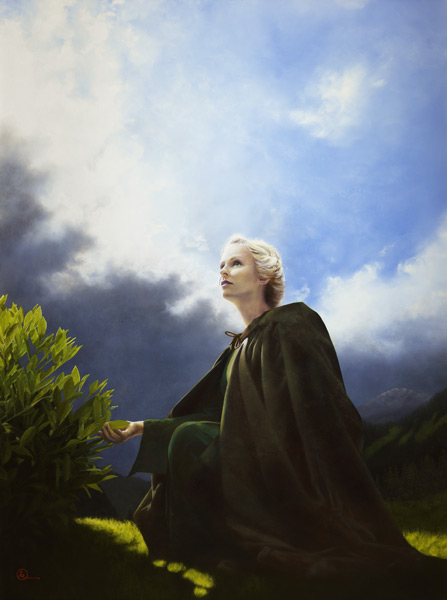 "The
world has invented narratives that cast her as the fool, the simpleton,
the bystander, and even the whore. Even in the church, we try to have
her both as the foresighted heroine and the servile mute. But Eve, the
mother of all living is what she always has been: an incredible woman
who was brave enough to see that her disobedience was the only
way forward. I think we should bear her in mind before we decry the
efforts or motives of women who wear pants to church or ask to attend
priesthood session… acts that don’t even constitute disobedience.
If life were only about choosing right and wrong, with rewards for correct behavior and punishment for incorrect, I truly think most of us would catch on. Almost all choices, though, upon closer examination are actually a choice between two slightly differentiated possibilities. Often it’s a choice between the greater of two goods, or the lesser of two evils. And by choosing any one reality we, by necessity, omit all others. Eve’s courageous choice brought both tremendous positive AND negative consequences into being. Obtaining a knowledge of good and evil necessarily brings the understanding that good and evil are actually abstract concepts, as are choice and accountability. Sometimes we DO ask for bread and receive stones, and sometimes our loaves come with serpents instead of fishes. Those who seek God with a pure heart sometimes live in crushing poverty their whole lives, while those who exploit the meek and lowly sometimes prosper phenomenally. Sometimes good women with no greater desire in the wide world, miscarry their babies or fail to conceive them at all. Sometimes children (the only innocents among us) are raised in situations of almost constant abuse or neglect. Sometimes the just are imprisoned and the evil go free. That is the true nature of our world. That is the substance of a knowledge of good and evil. One cannot simply go and do, like Nephi, without eventually coming up against a Laban moment, where good is now evil and evil is good, and the sword is in the last place we would want it… in our hand. One of the realities we have to wake up to is that just like life, the scriptures are positively brimming with contradiction. I personally think that’s one of the things that make them beautiful and useful. Prayers aren’t always answered. Faith isn’t always rewarded with knowledge. Sometimes people ask and do not receive. Sometimes they knock on doors always closed, and yet….
I still believe in a loving and perfect God. I believe I am capable of love because he first loved us. I have a family here on earth and I want to share my life with them through all eternity. I believe that a wildly imperfect young man received revelations from God and tried to offer them to the world in his wildly imperfect way, and I love those revelations. I love the wildly imperfect kingdom of God we have established on Earth with our meaty hands, and I want nothing more than for it to become a Zion. I have covenanted literally everything I have and will ever obtain to making that happen. I believe that’s the most wildly irresponsible promise I’ve ever made, and I’m deeply grateful that I was given the opportunity to make it."
Subscribe to:
Posts (Atom)
................
